
Article: Porsche Mission S: A New Chapter in Porsche’s Supercar Story
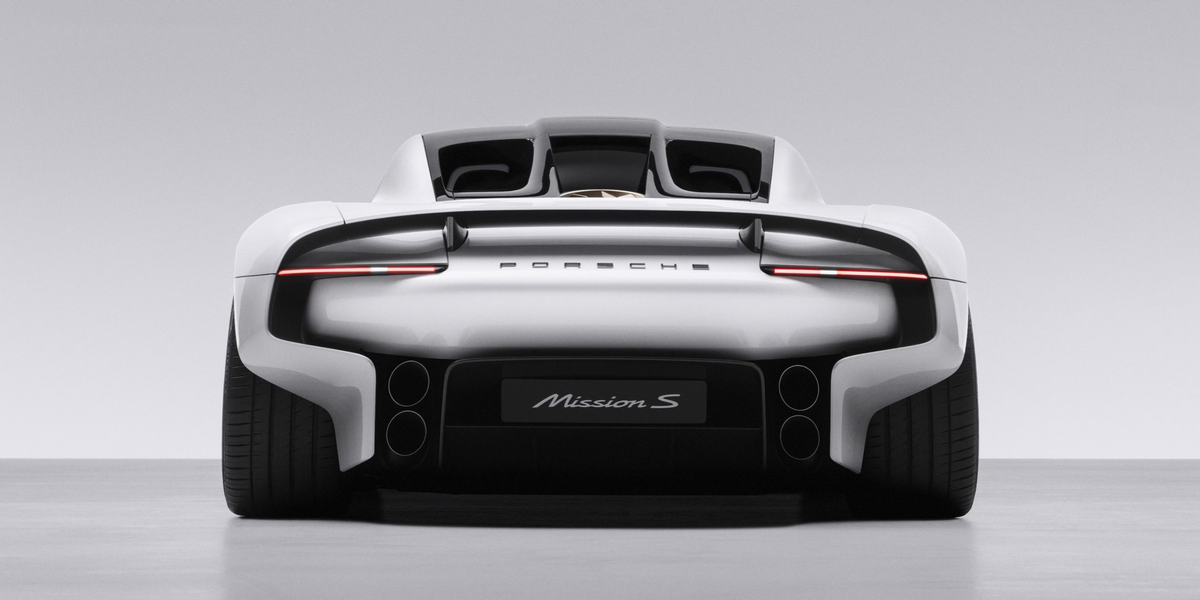
Porsche Mission S: A New Chapter in Porsche’s Supercar Story
After just eight months of development the new design chief Tobias Sühlmann and his team at Porsche have announced their latest and Sühlmann's first project with Porsche sports car.
“Michael Leiters called me one evening and said he had an idea and a vision for a car that could sit above the 911,” he said.
Sühlmann, who was previously design chief at McLaren and has also worked at Volkswagen, Bugatti, Aston Martin and Bentley, replaced long-time design boss Michael Mauer in February this year. It's now very clear what's been keeping him busy since starting with Porsche and we are very excited by what he has come up with.
The Mission S is a bold vision of the future that brings together motorsport heritage, purist design and a new ambition for its sports car range. Here’s our take on one of the most significant Porsche announcements in recent years.
Porsche has given enthusiasts plenty to talk about with the unveiling of the Mission S. Revealed in New York on 15 October 2026, this striking vision model offers a glimpse into the future of Porsche design while confirming something particularly exciting: the development of a new mid-engined super sports car platform positioned above the iconic 911.
This is more than a styling exercise. Porsche has made clear that it intends to introduce a permanent addition to its model range, rather than another limited-production hypercar. For a brand so closely associated with the 911, it represents a significant step forward.
So, what makes the Mission S so interesting, and what could Porsche’s announcement mean for the future of the marque?
At first glance, the Mission S has the unmistakable presence of a Porsche, but there is plenty here that feels new.
Its low, wide stance, distinctive front wings and flowing roofline give it the proportions expected of a serious mid-engined supercar. Look a little closer, however, and the inspiration behind its design becomes even more interesting.
Porsche has drawn on some of its most important historic models, including the 911, 959, 928 and 917, alongside the legendary 911 GT1. Rather than simply reproducing familiar details, the design team has reinterpreted them for a new generation.
The result is a car that feels connected to Porsche’s past without being held back by it.
One of the standout details is the visible fan wheel at the rear, inspired by the cooling solution of the iconic Porsche 917 racing car.

The wheels also reference the distinctive dial-style design associated with the 928, while the integrated active rear wing combines aerodynamic function with a clean, purposeful appearance.

These are the details that make the Mission S particularly compelling. Every element appears to have a reason for being there, reinforcing Porsche’s emphasis on design that serves a functional purpose.
Perhaps the biggest story is not the styling, but what the Mission S represents.
Porsche has announced plans for a new mid-engined super sports car platform that will sit above the 911 in its range. Importantly, this is intended to become a permanent part of the line-up, rather than a one-off or limited-run special.
That is a significant distinction.
Porsche has a long history of producing exceptional cars beyond the 911, from the 959 to the Carrera GT and 918 Spyder. These models have each demonstrated what happens when Porsche pushes its engineering ambitions further, but the Mission S points towards a more permanent place at the top of the range for a dedicated super sports car.
The mid-engined layout is central to that ambition. By positioning the engine centrally, Porsche can achieve the distinctive proportions, balance and packaging associated with this type of performance car.
For enthusiasts, the announcement raises some fascinating questions about how this new model will sit alongside the 911 GT3, GT3 RS and other high-performance Porsches.
Porsche has yet to confirm the final production specifications, so performance figures, engine details and the eventual model name remain unknown. For now, the Mission S should be viewed as a vision of what is to come, rather than a finished production car.
Even so, the direction is clear: Porsche wants to explore a new level of performance while preserving the qualities that have defined its sports cars for generations.
The exterior may be the first thing that catches your attention, but the interior arguably reveals even more about Porsche’s thinking.
At a time when many modern cars are increasingly dominated by large touchscreens and digital interfaces, the Mission S takes a more considered approach.
The cockpit combines analogue-inspired details with modern digital technology, placing the driver at the centre of the experience. Five round instruments sit behind the steering wheel, with a rev counter featuring an analogue-style needle taking centre stage.
The displays adapt to the selected driving mode, helping to keep the most important information in the driver’s line of sight.
Porsche has also chosen not to fit a permanently integrated central touchscreen or a fixed passenger display. Instead, a retractable smartphone holder allows the driver to use their own device for navigation and information when required.
Physical controls, tactile push-pull switches and a specially designed aluminium key further reinforce the focus on interaction between driver and car.
It is a refreshing interpretation of modern technology. Rather than adding more screens and features for the sake of it, Porsche appears to be asking a more fundamental question: what does a driver actually need to enjoy the experience?
For those who appreciate the mechanical connection of a great sports car, that philosophy will be particularly appealing.
It would be easy to dismiss the Mission S as an exciting design study, but Porsche’s announcement gives it greater significance.
The car provides an early look at the design direction the company intends to develop across its future portfolio. Its emphasis on recognisable proportions, restrained surfaces and purposeful detailing suggests that Porsche wants its future cars to remain unmistakably Porsche, even as the technology and engineering evolve.
The launch location was equally deliberate. Porsche unveiled the Mission S on a pier in Queens, New York, overlooking the Manhattan skyline. It was the same location associated with photographs of the Porsche 550 Spyder in 1953, linking the new vision model to a car that helped establish Porsche’s identity as a maker of focused, lightweight sports cars.

That connection between heritage and future ambition runs throughout the Mission S.
It is not about recreating the past. It is about taking the principles that made those cars special and applying them to what comes next.
For existing Porsche owners and enthusiasts, the Mission S gives us plenty to look forward to.
The prospect of a permanent mid-engined flagship opens up a new chapter in Porsche’s model history. It also raises interesting questions about the future positioning of the brand’s most focused road cars and how the new platform might complement the existing range.
For collectors, the announcement will be worth following closely as further details emerge. The final production car, its technical specification, availability and positioning within the wider Porsche line-up will all help determine its place in the market.
It is important not to get ahead of the facts. Porsche has not yet confirmed the full production specification, pricing or launch date, and the Mission S remains a vision model. But the commitment to developing a new super sports car platform makes this announcement more substantial than a typical concept reveal.
For now, the most interesting thing is the direction Porsche has chosen: a renewed focus on the driver, a design language rooted in its history and a new flagship ambition beyond the 911.
Our verdict
The Porsche Mission S is an exciting glimpse into what the future could hold for one of the world’s most recognisable sports car manufacturers.
Its design is bold without abandoning Porsche’s heritage, its interior places driving enjoyment ahead of digital excess, and its mid-engined architecture signals a serious new ambition for the top of the range.
But it is the announcement behind the car that matters most. Porsche is not simply imagining another special edition; it is preparing to establish a new, permanent super sports car offering above the 911.
There is still plenty we do not know, and the production car will ultimately be judged on its engineering, performance and driving experience. Nevertheless, the Mission S has given Porsche enthusiasts a compelling reason to watch what happens next.
It's a yes from us.
Porsche's official launch video;
Porsche's announcement here
Photo credit: Porsche


Leave a comment
This site is protected by hCaptcha and the hCaptcha Privacy Policy and Terms of Service apply.